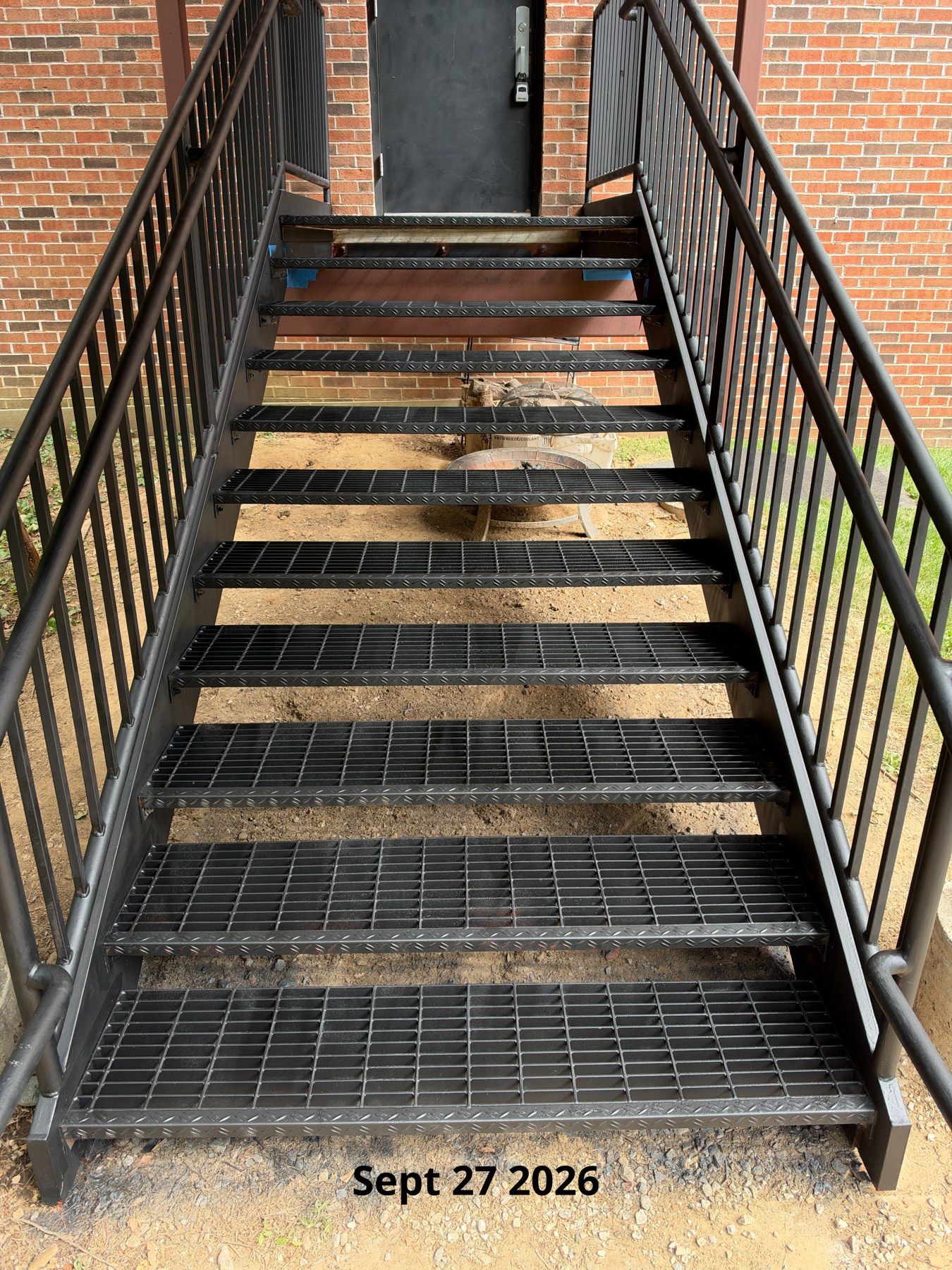
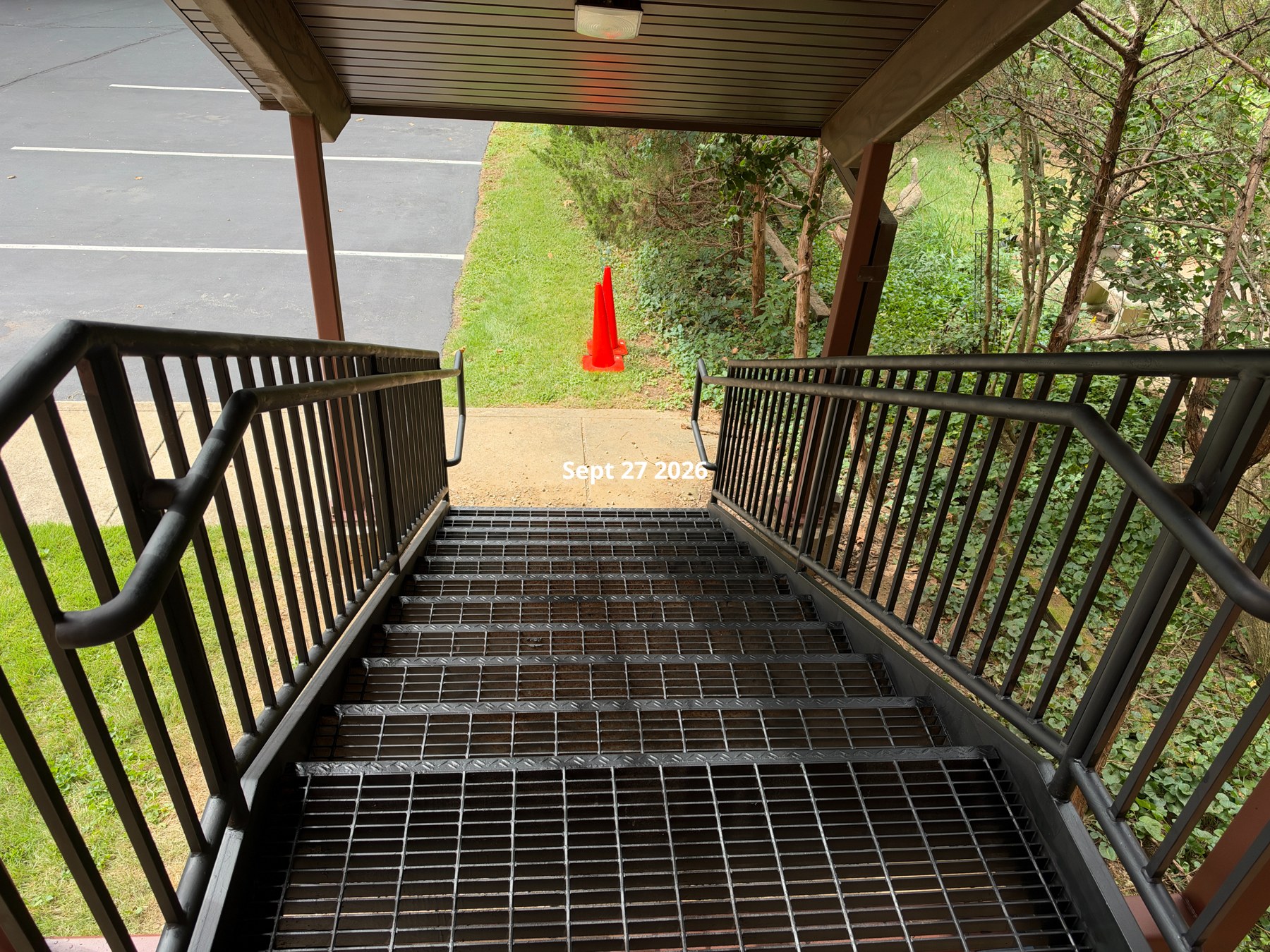
Why this project was undertaken
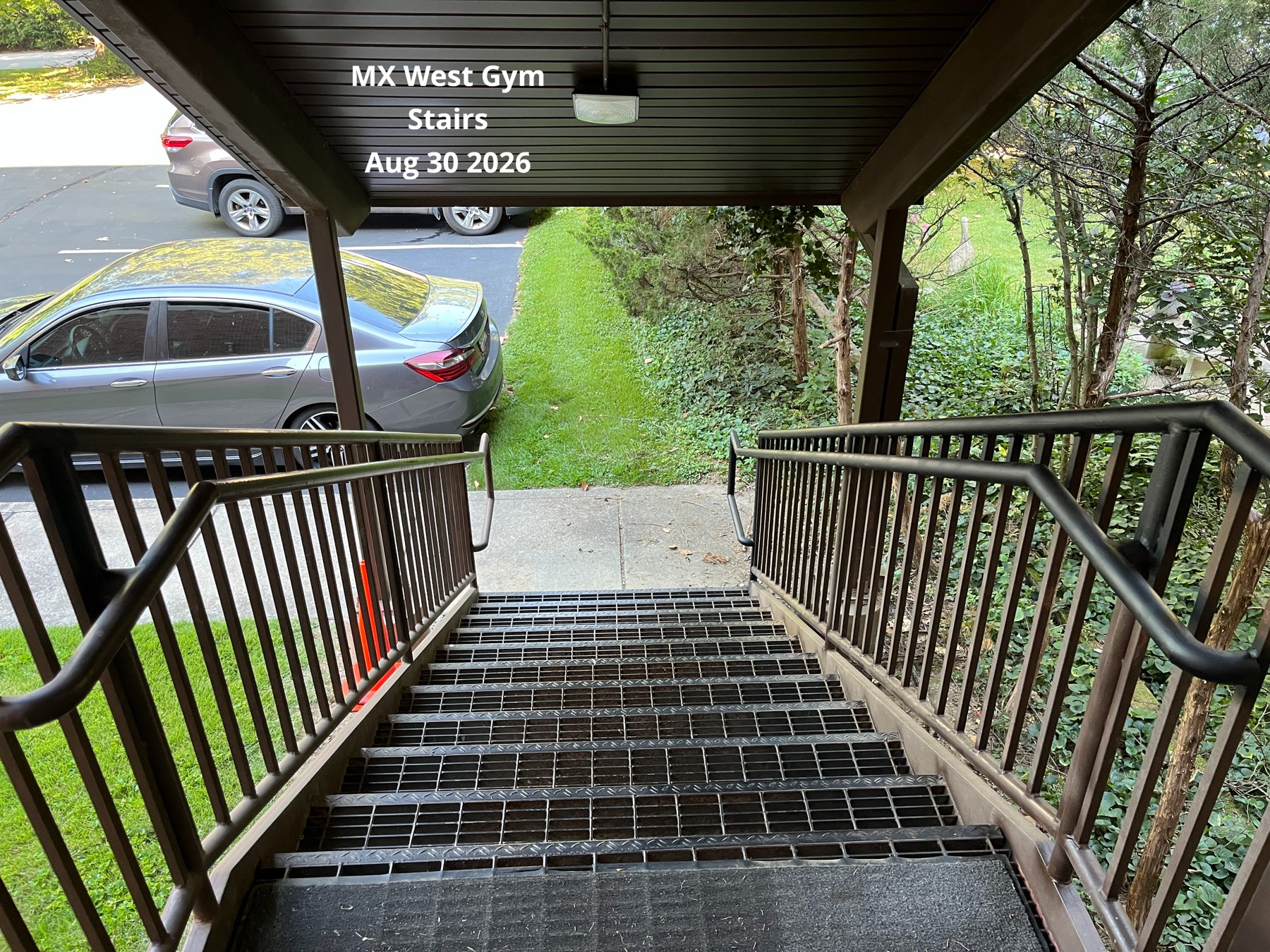
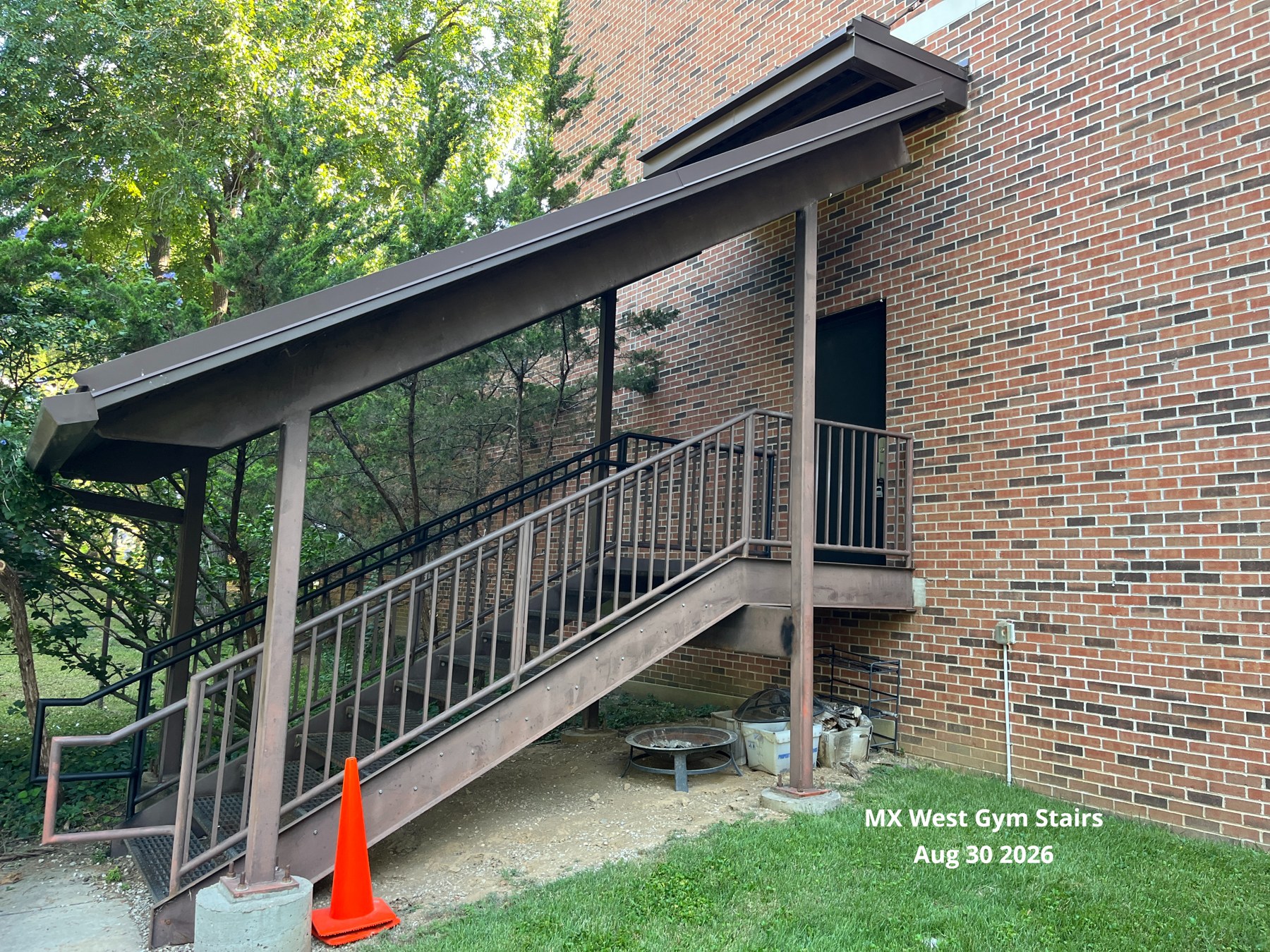
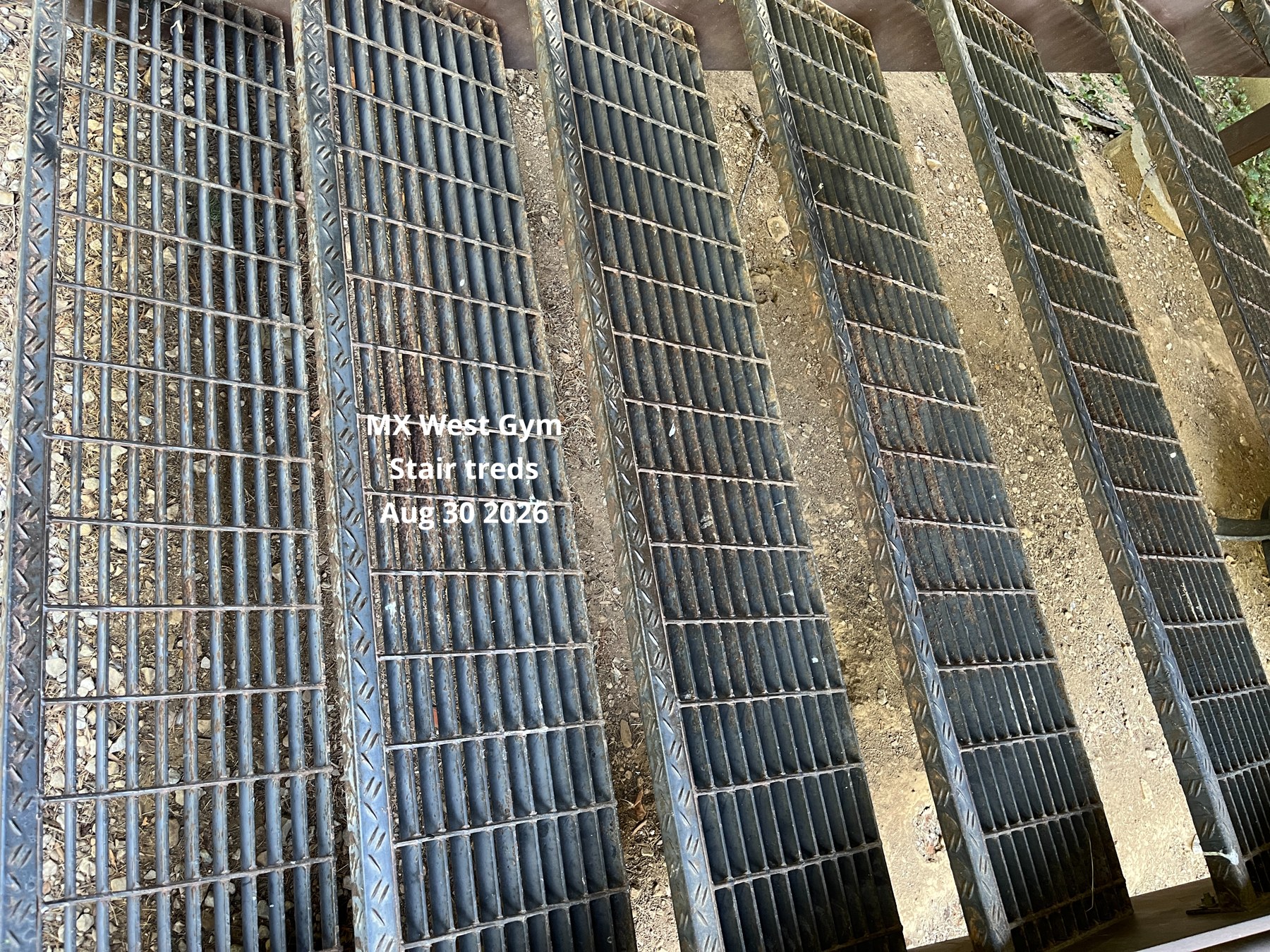
The west gym stairs are exposed to rain, humidity, temperature swings, vegetation, dirt and regular foot traffic. The older coating had become weathered, with visible rust and deterioration in several locations.
The work was intended to do more than improve appearance. Cleaning the steel, removing loose material, treating rust and applying fresh protective coatings helps slow further corrosion and makes future maintenance easier.
Project goals
- Clean accumulated dirt, moss and organic material.
- Remove loose paint and loose/scaly rust where practical.
- Stabilize remaining rust and prime exposed metal.
- Recoat railings, stringers and structural steel.
- Protect the open-grate treads with a tougher black coating.
- Improve the appearance of a highly visible exterior exit stair.
Before and after
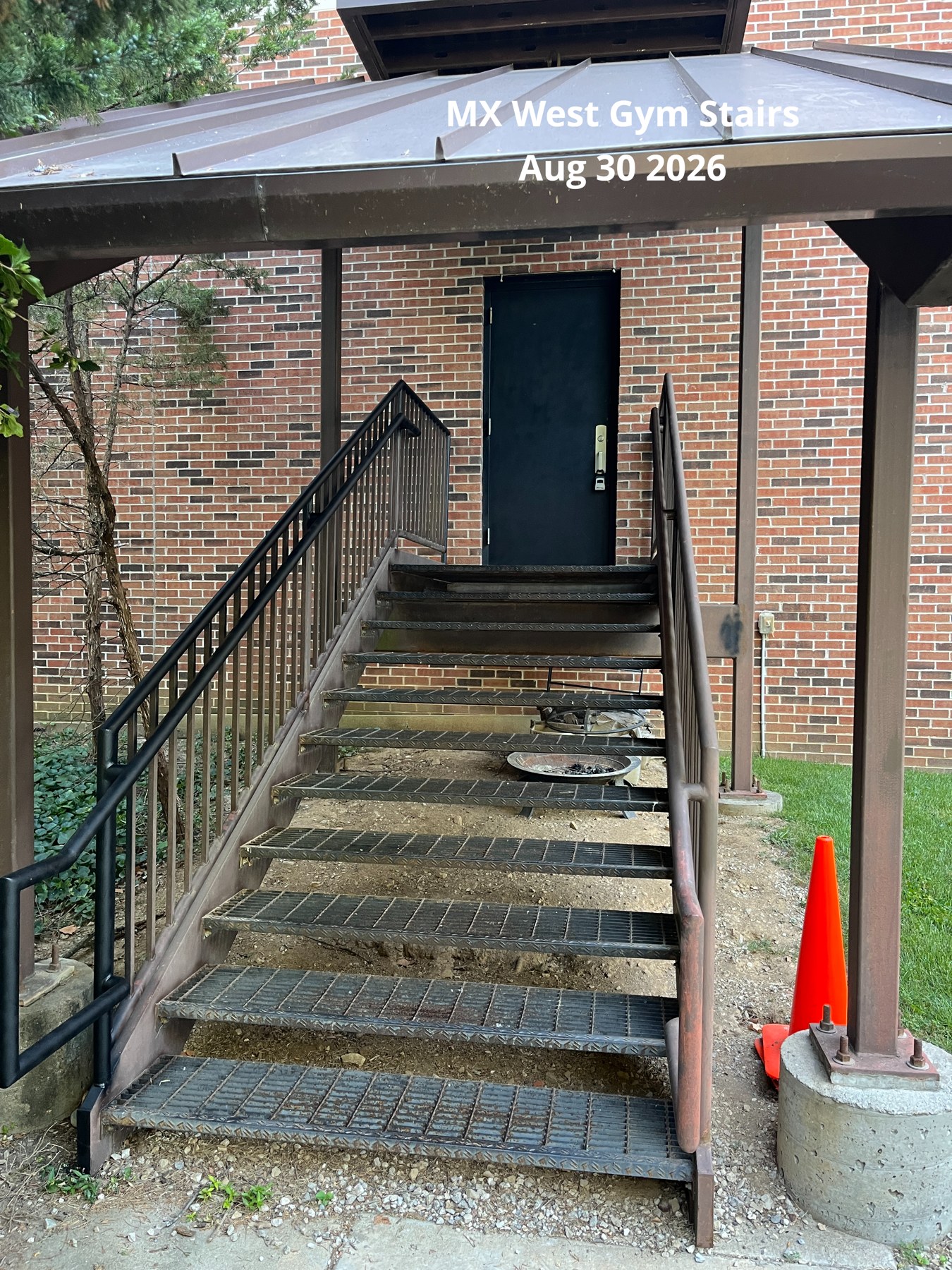
Weathered stairway before the September maintenance work began.
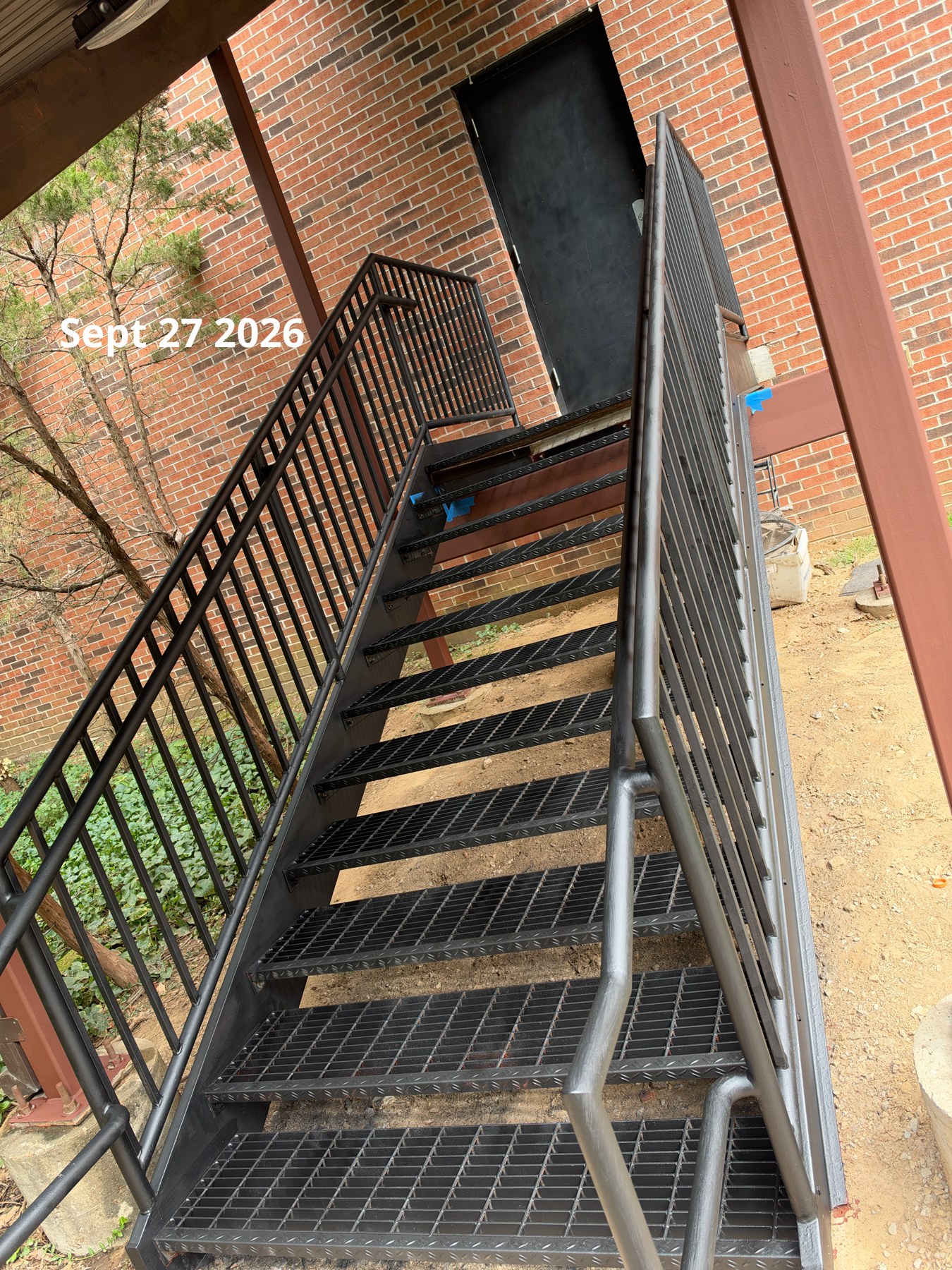
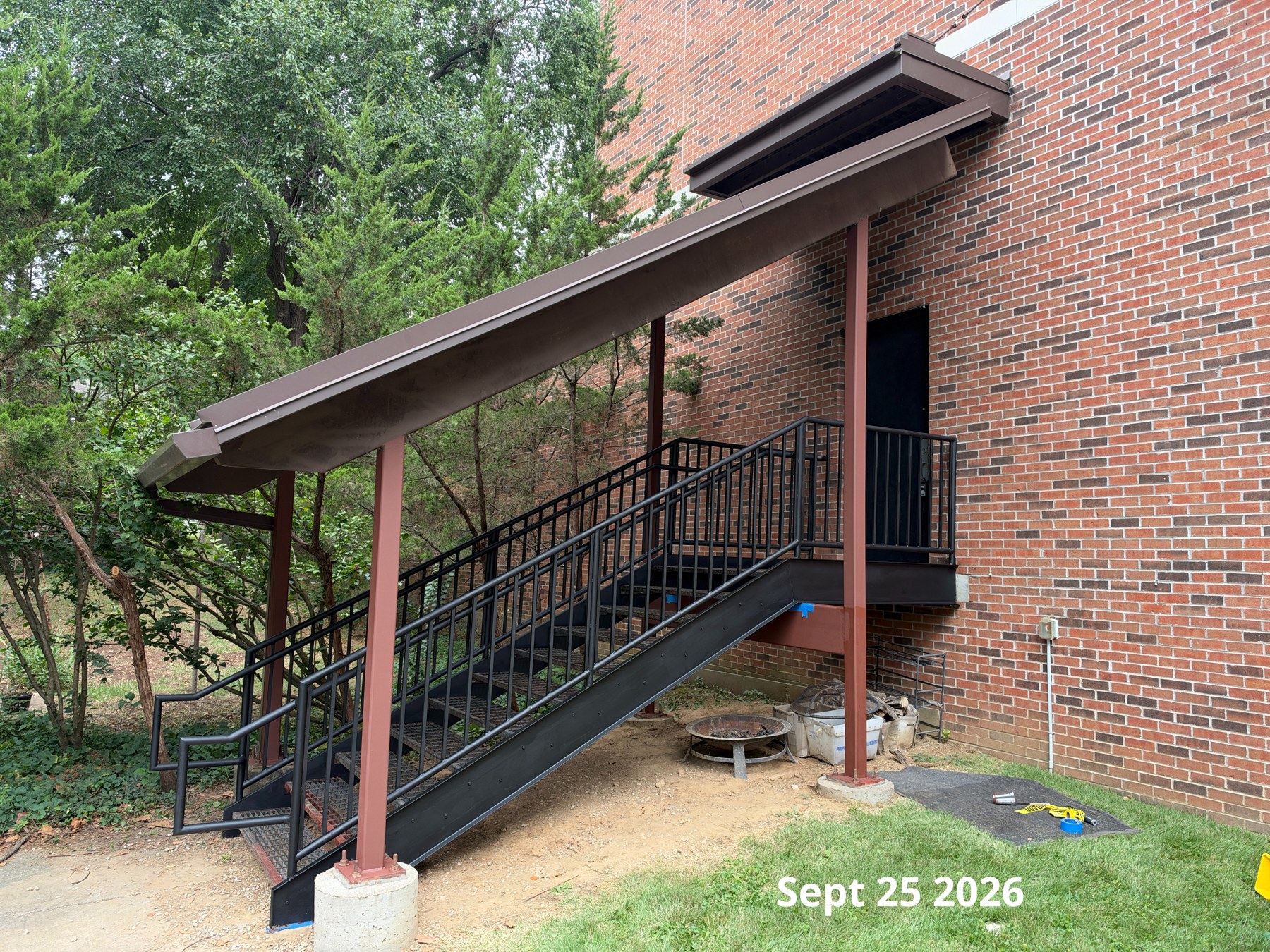
Black tread coating applied and the stair assembly substantially refreshed.
What was done
Existing condition documented
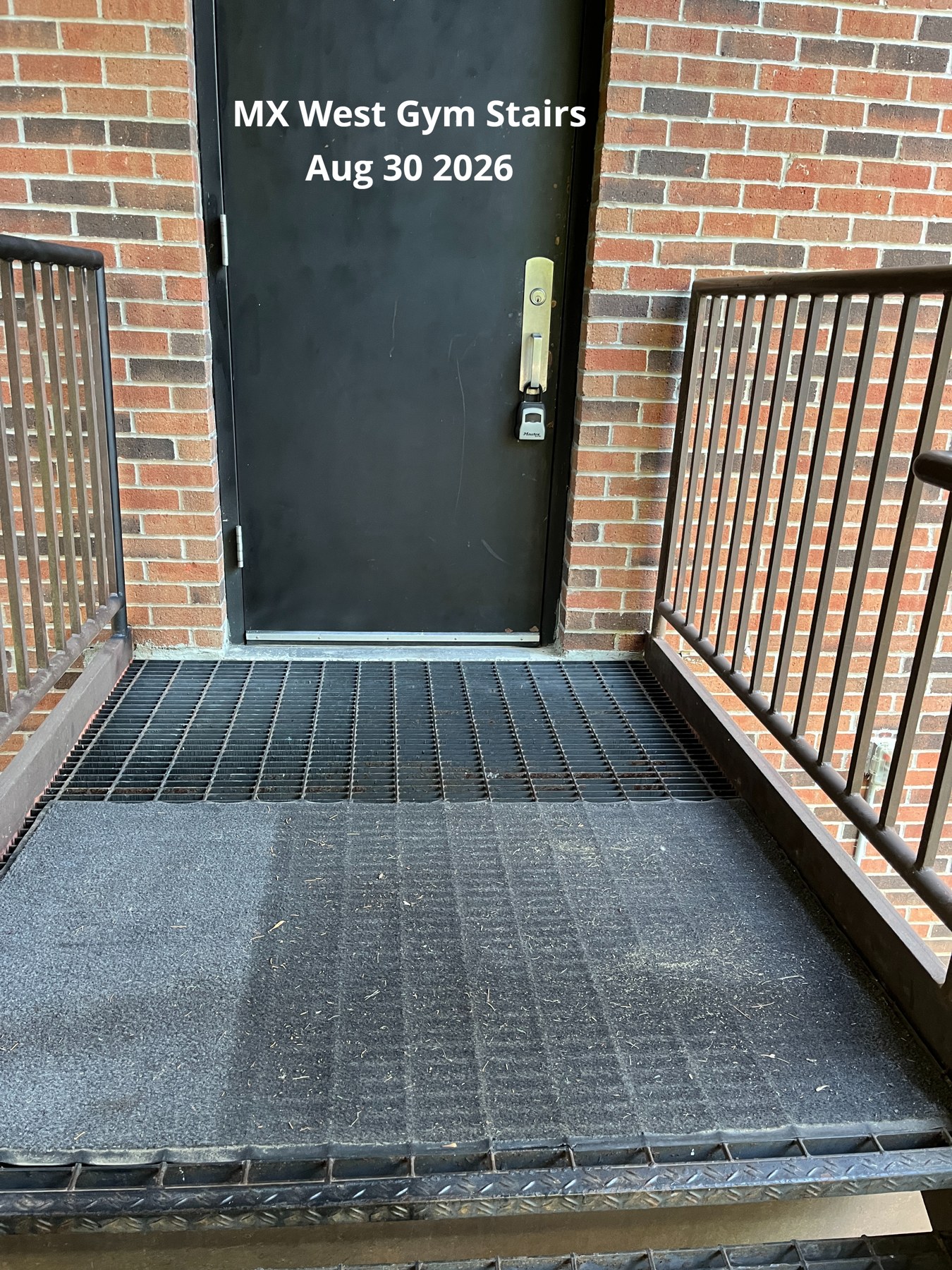
Photographs were taken of the treads, landing, railings, stringers and overall stair assembly. The images established the starting condition and helped identify weathered coating and rust-prone areas.
Cleaning and preparation
Dirt and organic buildup were removed, including mossy material on the shaded north side. The stairs were washed using cleaner/degreaser and water, then allowed to dry. Loose or failing material was scraped or brushed where needed before coating.
Rusty-metal primer and coating work began
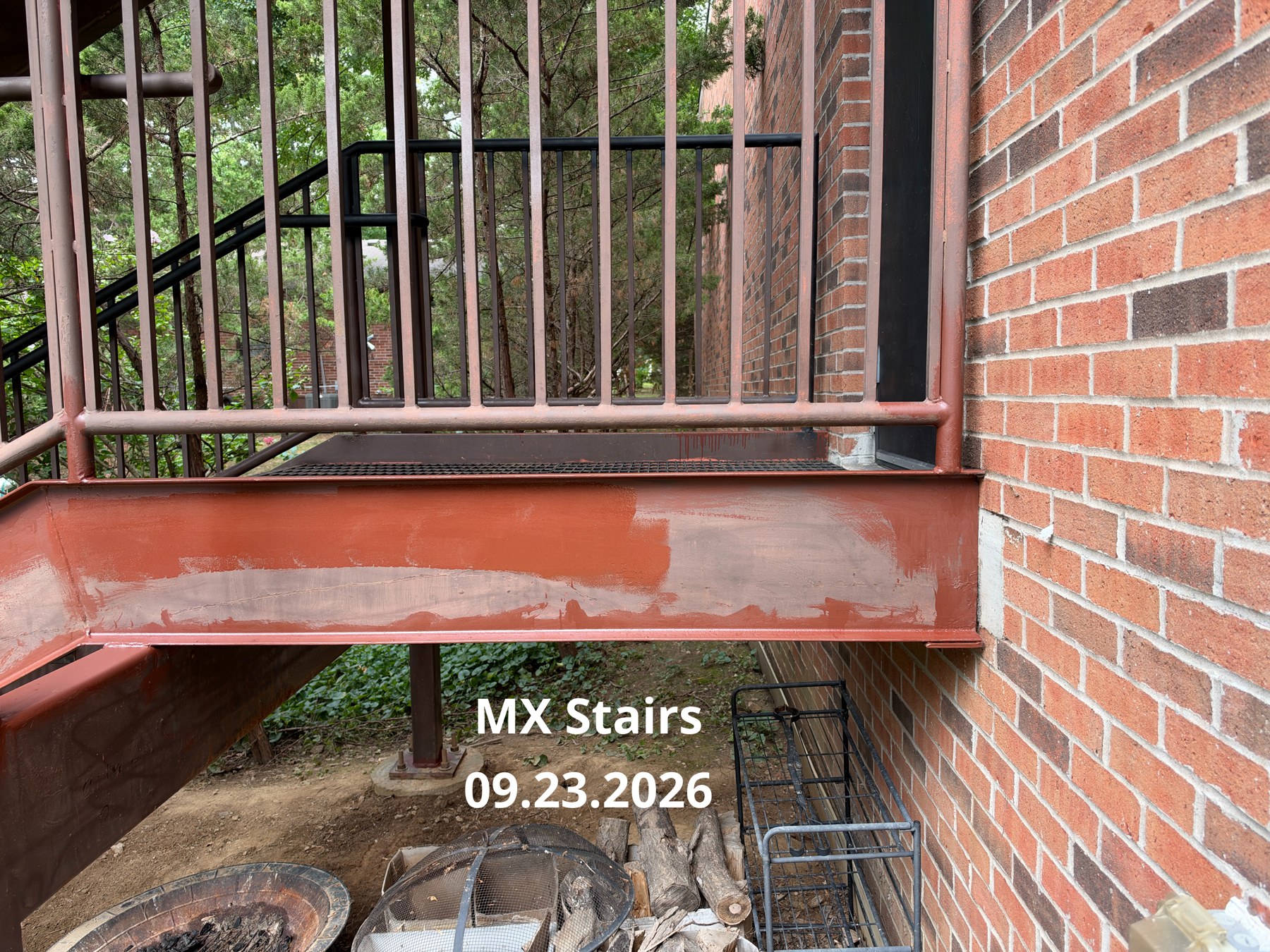
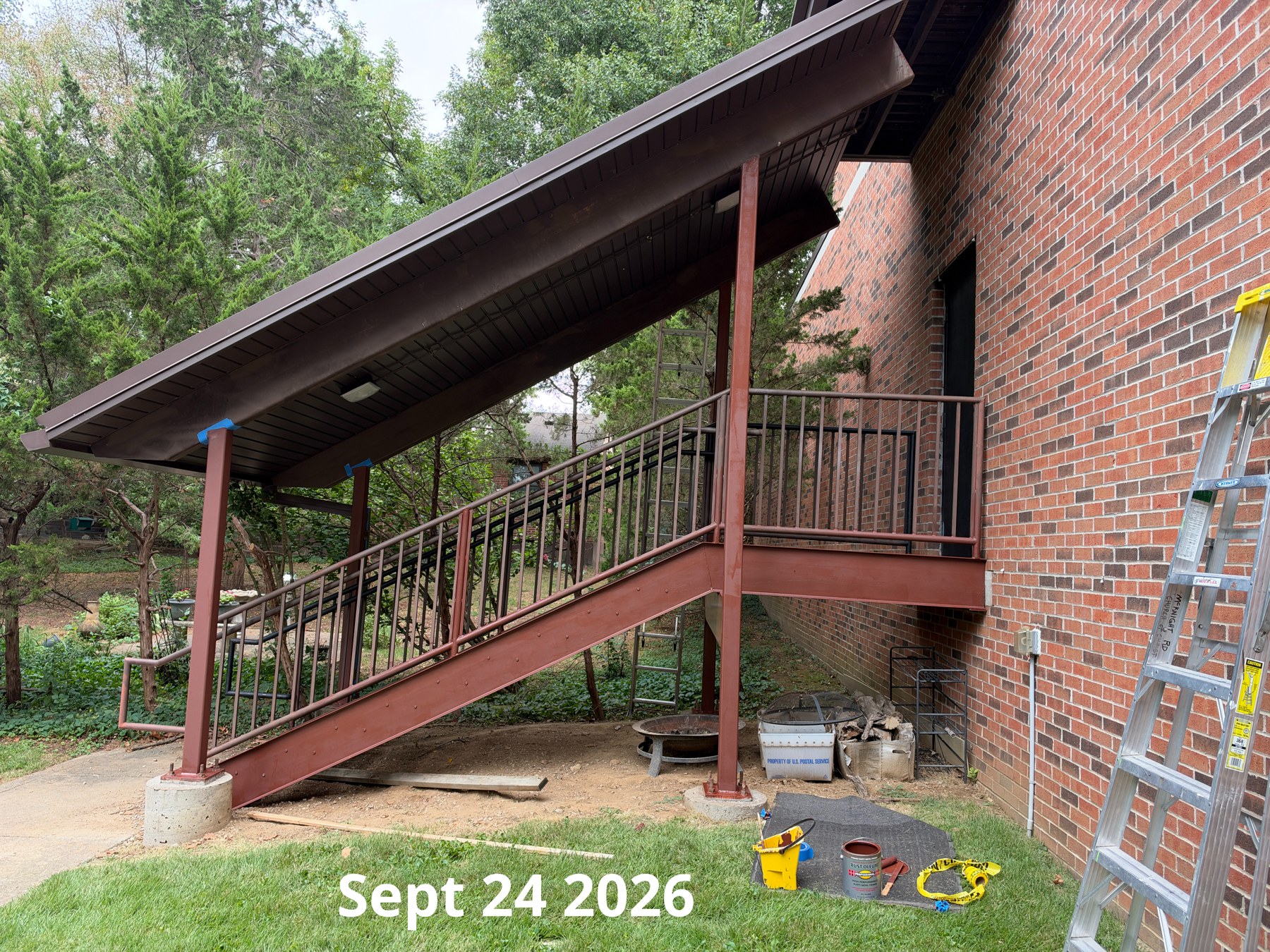
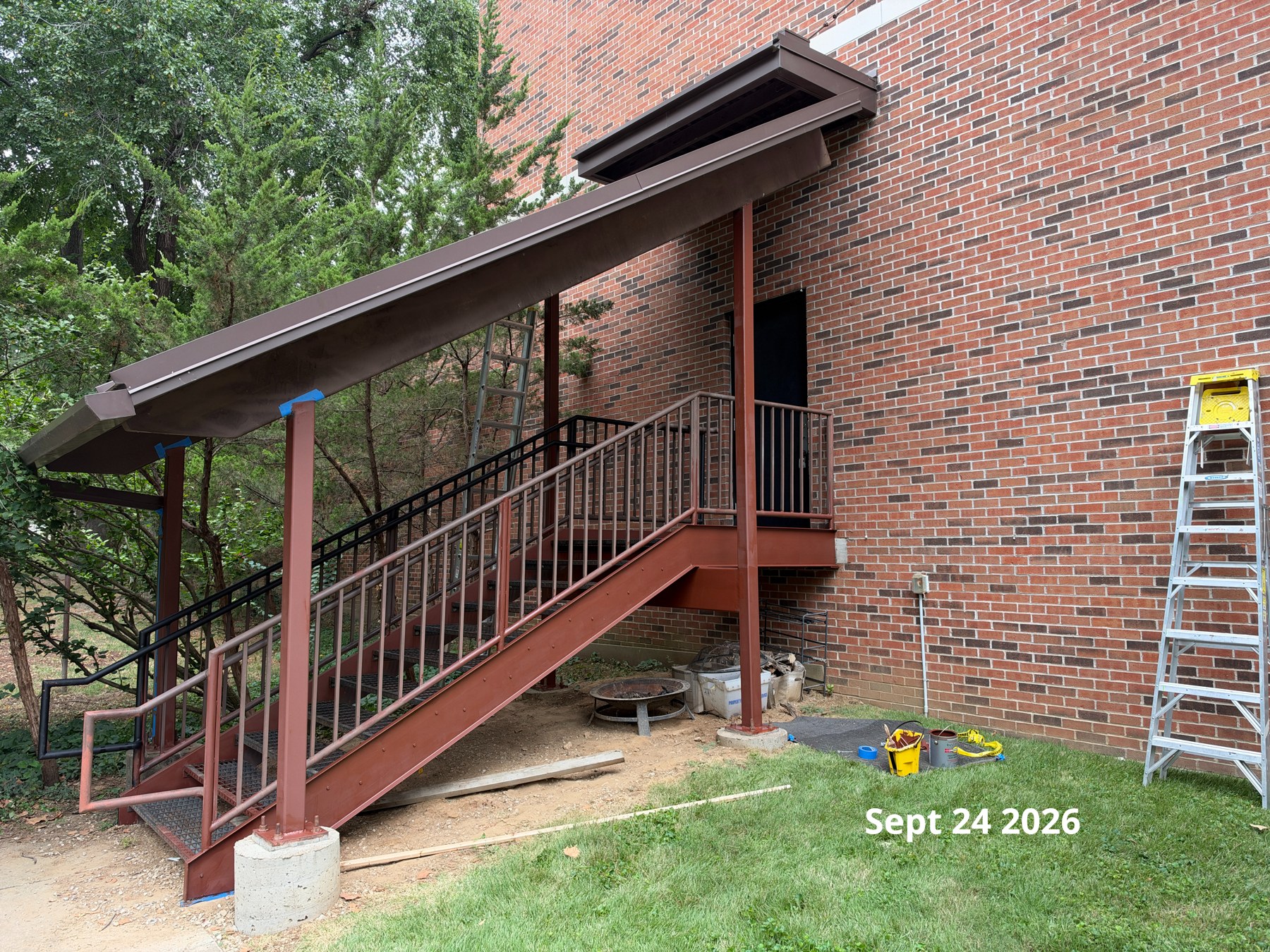
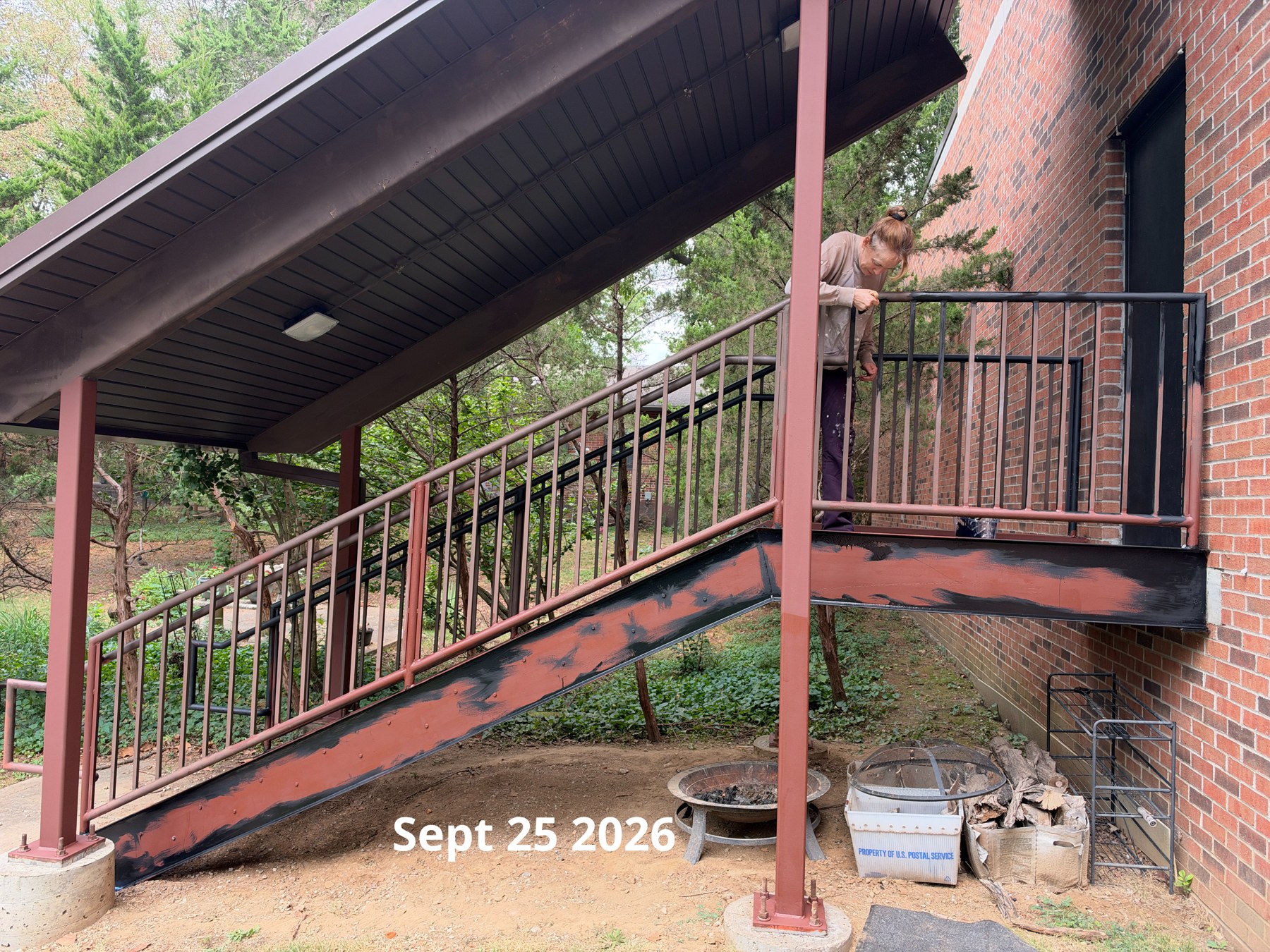
Prepared steel received rust-inhibiting primer, with particular attention to exposed metal, welds, edges and deteriorated areas. The photos show the reddish-brown Rust-Oleum rusty-metal primer on structural portions of the stairway.
Dark finish applied to the stair structure
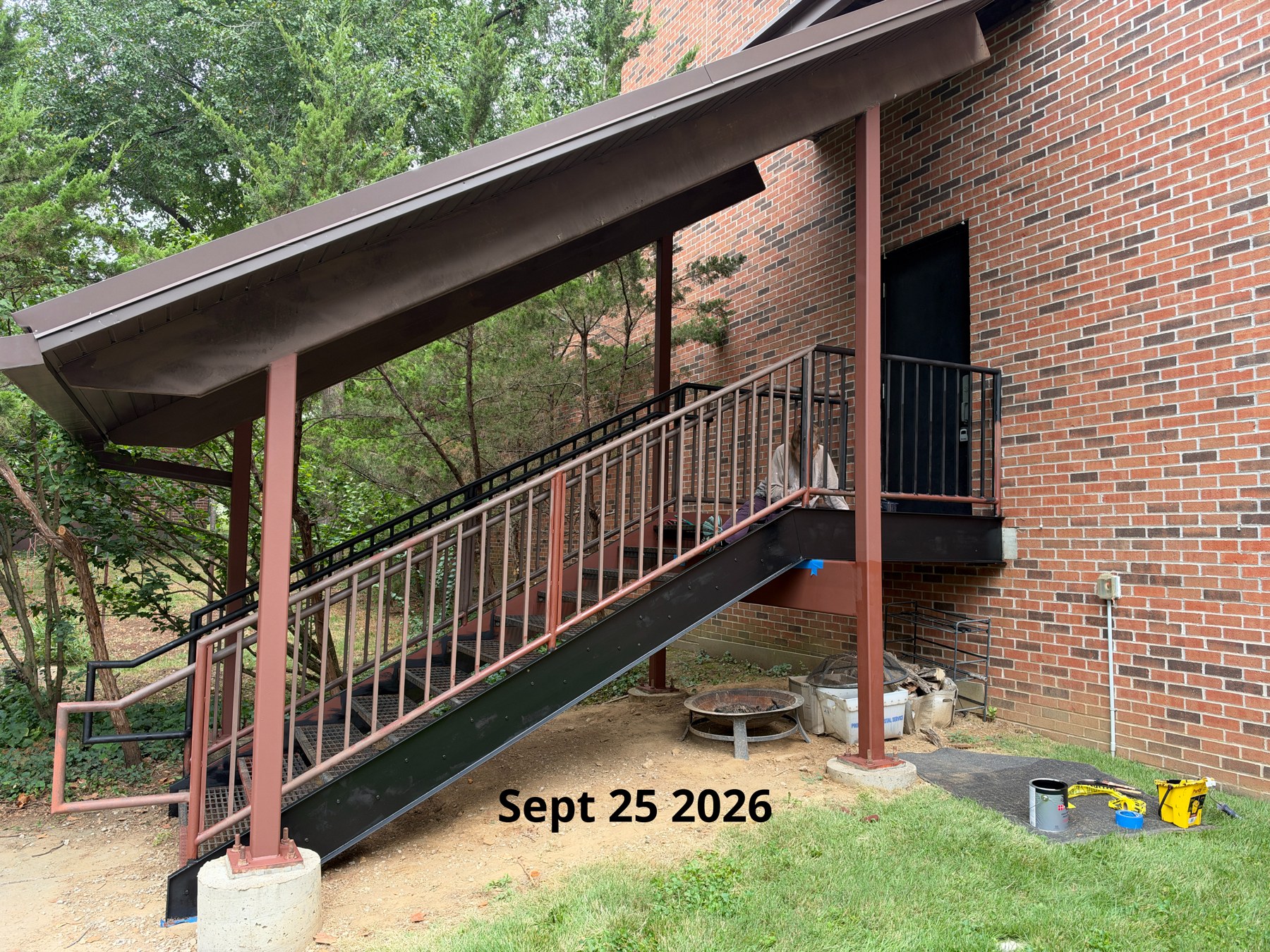
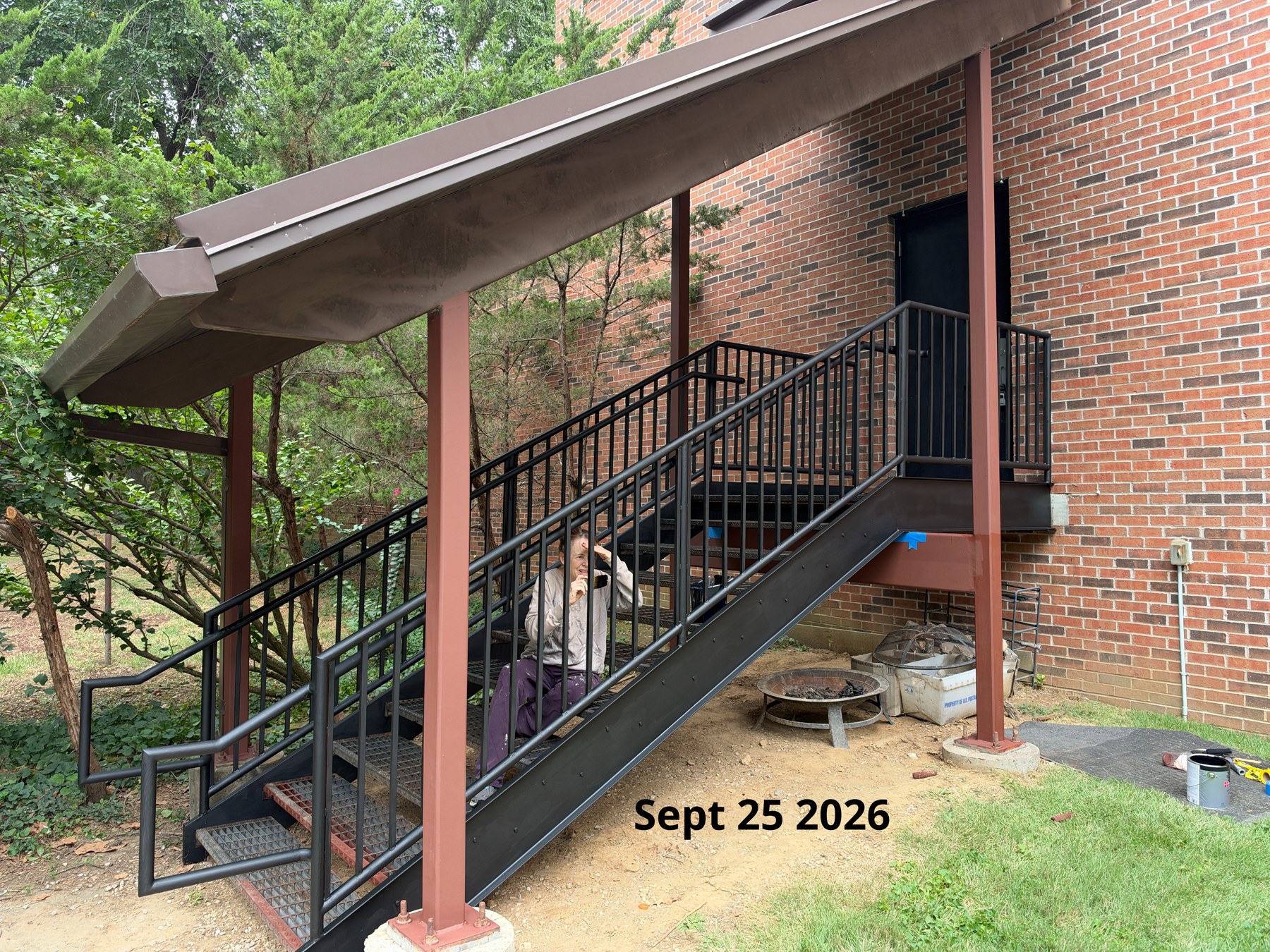
The railings, stringers and other structural portions were progressively recoated. Brushes and small rollers were useful on broad surfaces and rail components, while aerosol coating helped reach corners, intersections and other awkward geometry.
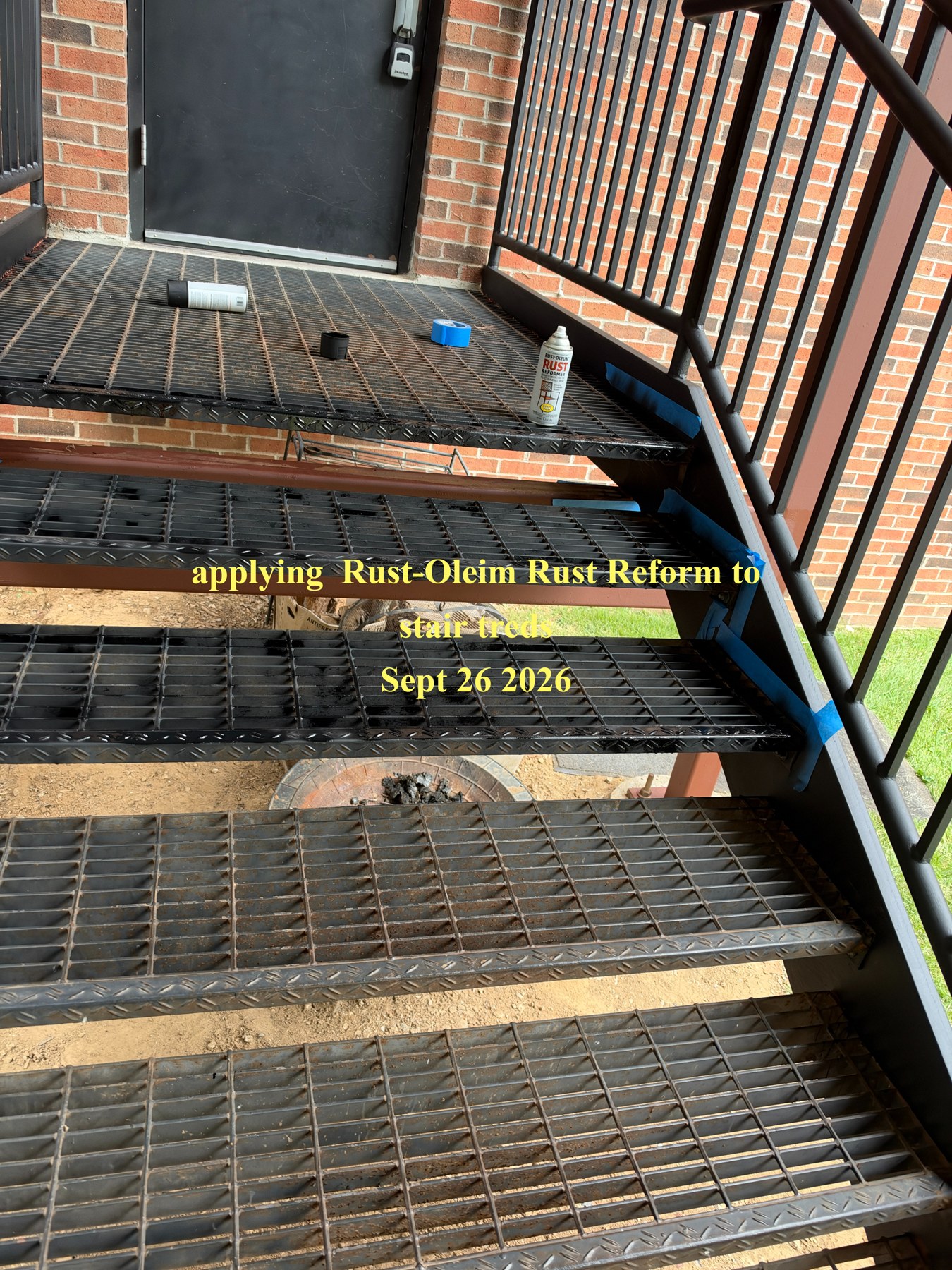
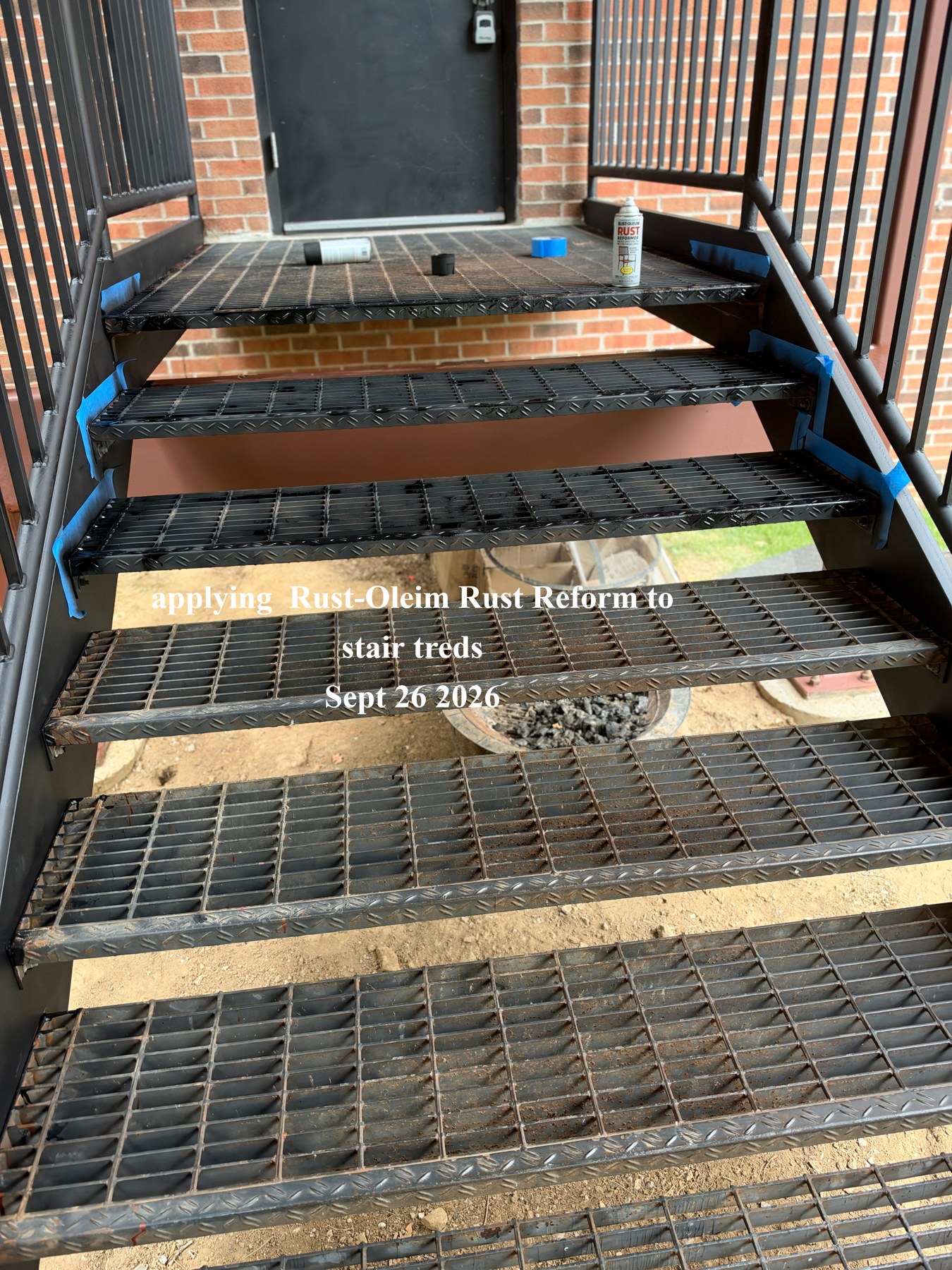
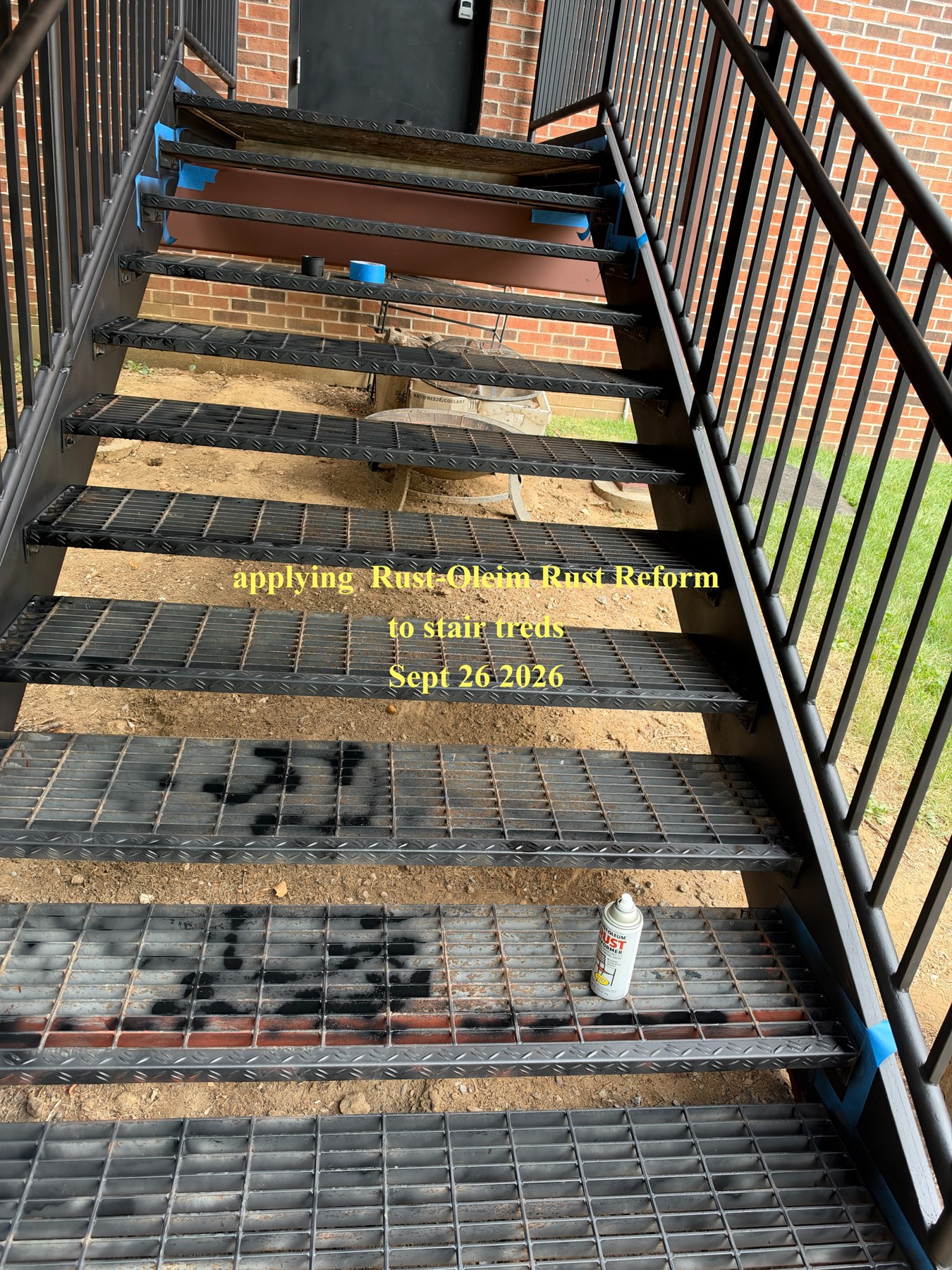
Rust Reformer applied to tread areas
Rust-Oleum Rust Reformer was applied to selected tread and rust areas before the final black tread coating. The open-grate construction required coating from multiple angles to reach bars, edges and intersections.
Black truck-bed coating applied to the treads
Rust-Oleum Truck Bed Pro Grade black aerosol was sprayed on the walking treads and diamond-pattern nosings. Several light passes were used rather than one heavy coat, helping cover the grate without excessively bridging the openings or creating runs.
Supplies used
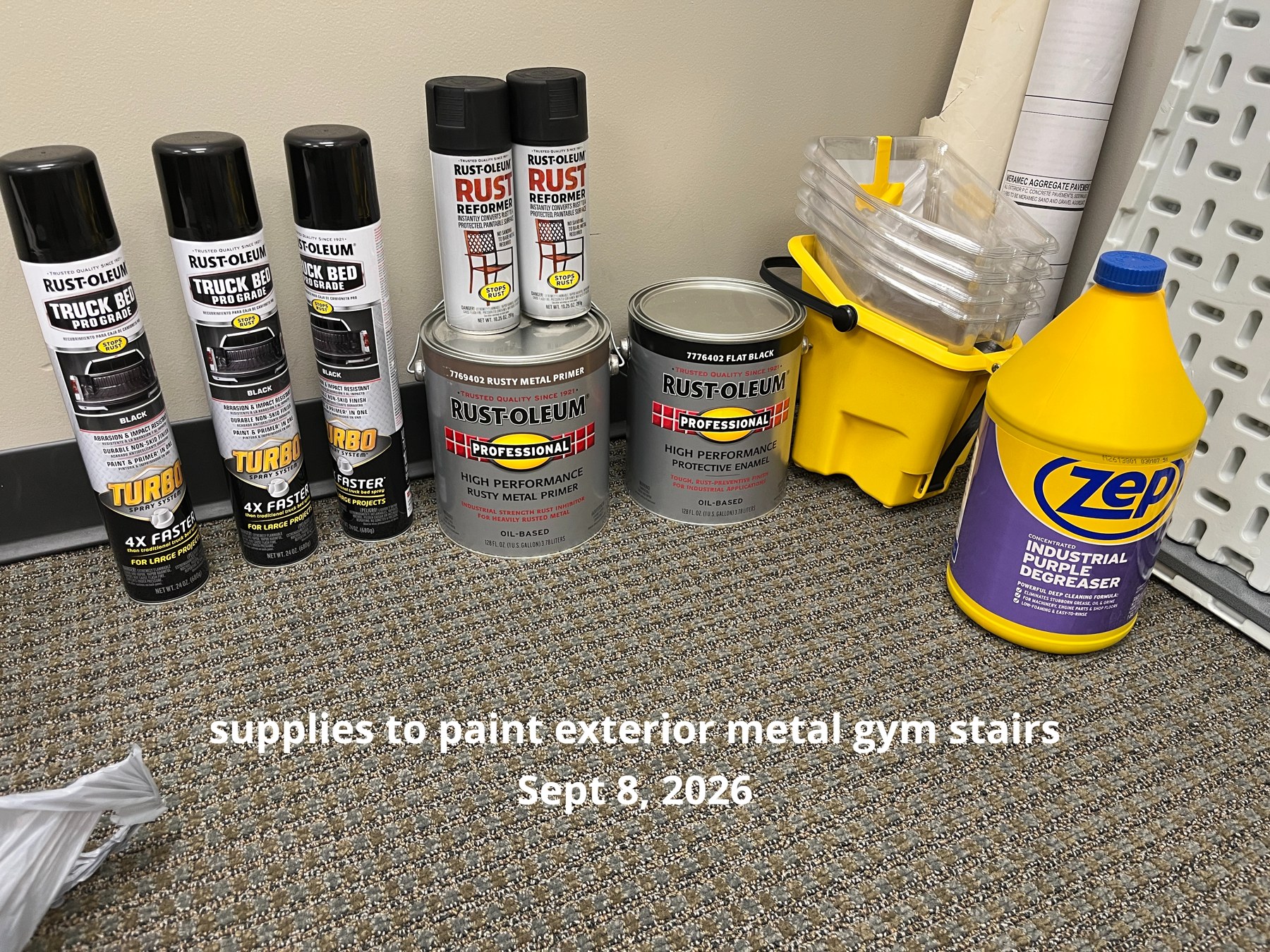
The September 8 supply photo documents the principal coatings and cleaner used for the project.
| Product | Use |
|---|---|
| ZEP Industrial Purple Degreaser | Cleaning grime and contamination before painting. |
| Rust-Oleum Professional High Performance Rusty Metal Primer Product 769402 | Rust-inhibiting primer for prepared weathered steel. |
| Rust-Oleum Rust Reformer aerosol | Converts/stabilizes selected rusted areas before finish coating. |
| Rust-Oleum Professional High Performance Protective Enamel — Flat Black Product 7776402 | Protective black finish used on portions of the steel assembly. |
| Rust-Oleum Truck Bed Pro Grade — Black | Textured, abrasion-resistant coating used on the open-grate treads and nosings. |
| Brushes, mini rollers, pans, tape and masking | Application, edge work and overspray control. |
How the coatings were applied
- Clean first: paint was not intentionally applied over wet, dirty or moss-covered steel.
- Rust areas: loose corrosion was removed and exposed/rusty metal was treated or primed before final coating.
- Brush/roller: useful for stringers, railings and accessible flat surfaces.
- Aerosol: useful around welds, corners, grating bars and other difficult-to-reach areas.
- Treads: the truck-bed coating was sprayed from multiple angles in light passes to reach the sides of the grate bars while preserving the open grate.
- Traffic control: the stairway was blocked when needed so coatings could dry and cure before use.
Test removal of the bottom two stair treads
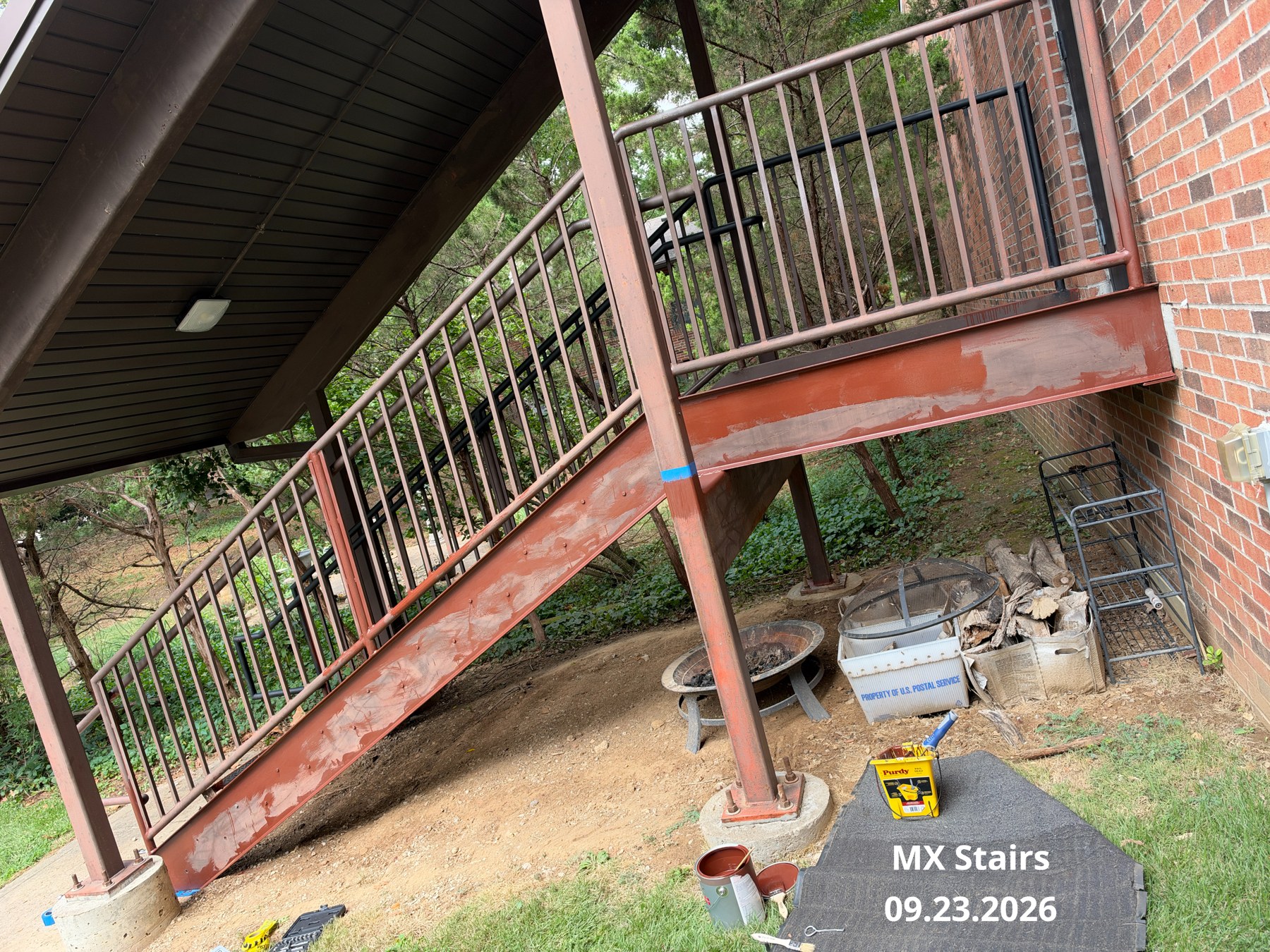
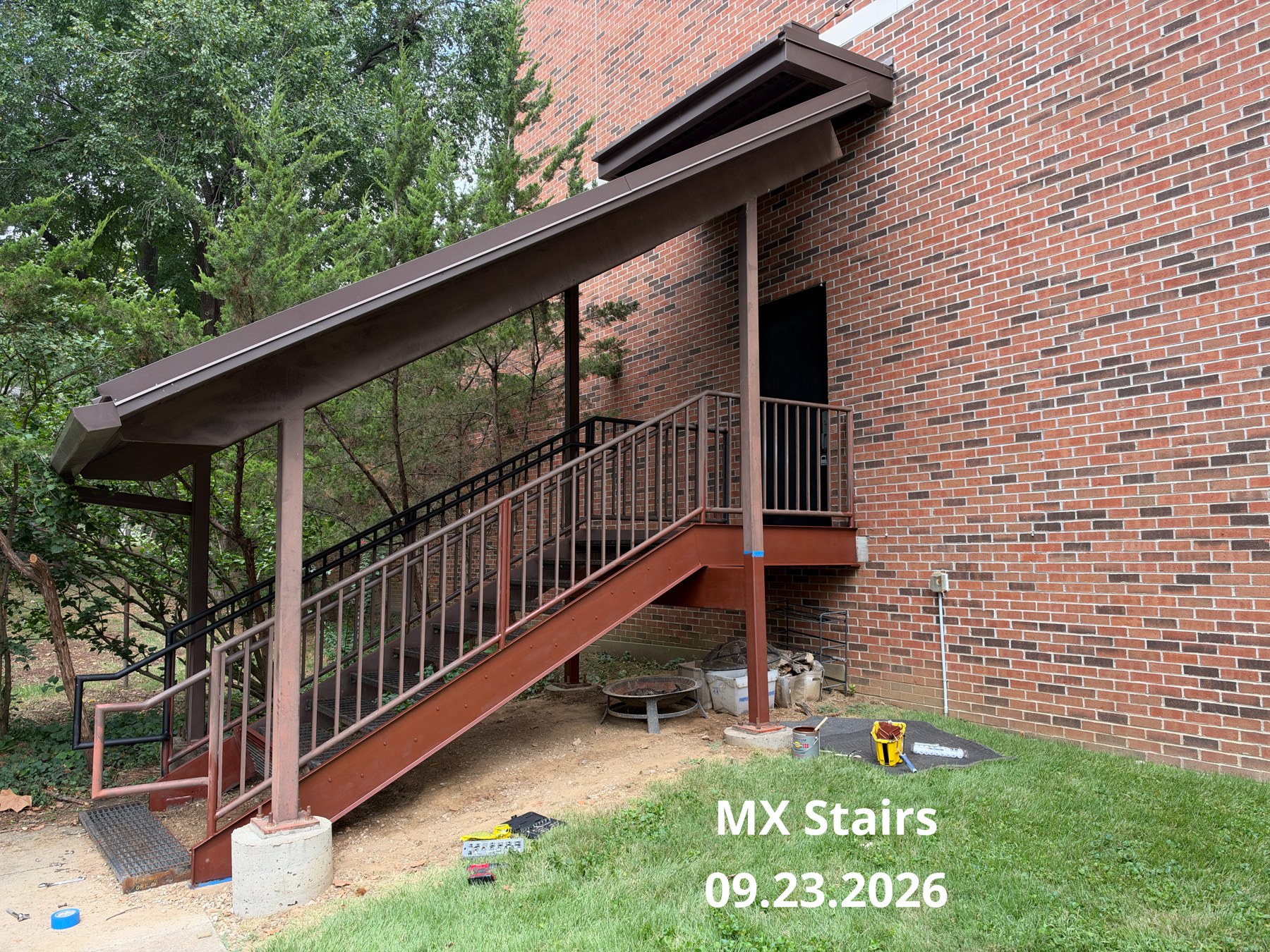
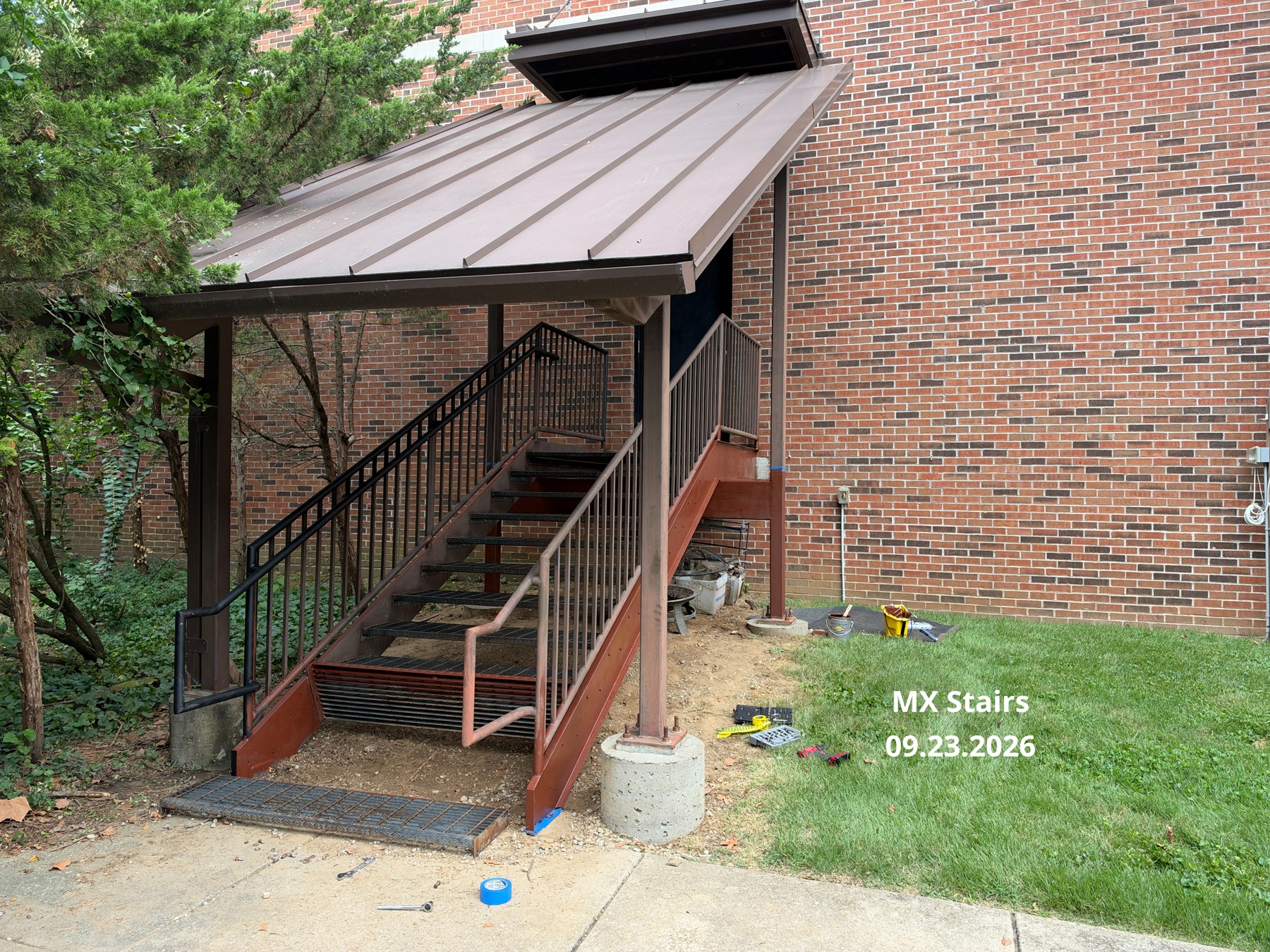
As part of the preparation work on September 23, the bottom two steel-grate treads were removed as a test. This made it easier to reach the supporting steel, tread edges and otherwise hidden contact areas for cleaning and coating.
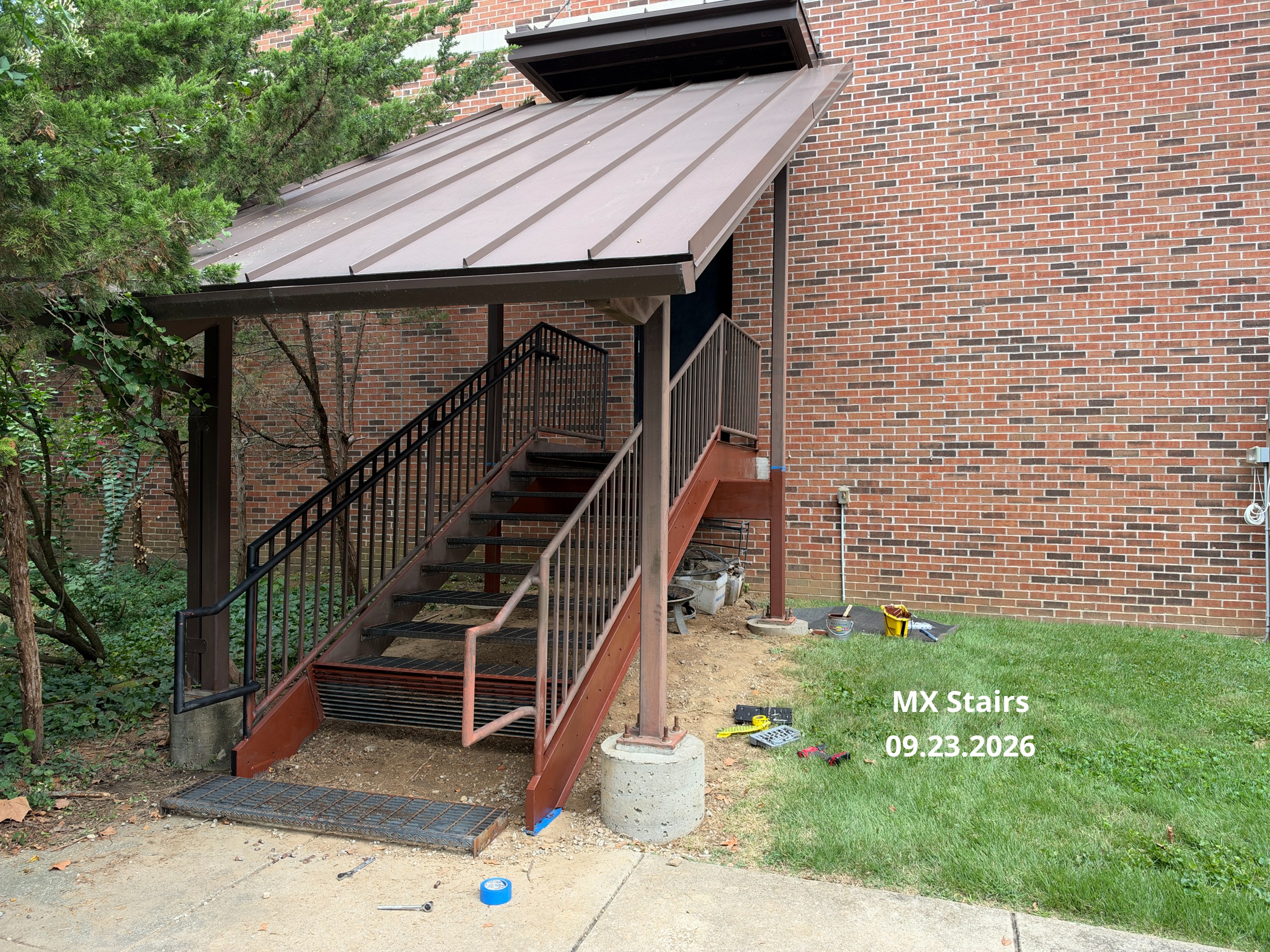
The two bottom treads were unbolted and removed so the surrounding steel could be inspected and coated more easily. The removed treads can be seen on the ground in front of the stairway.
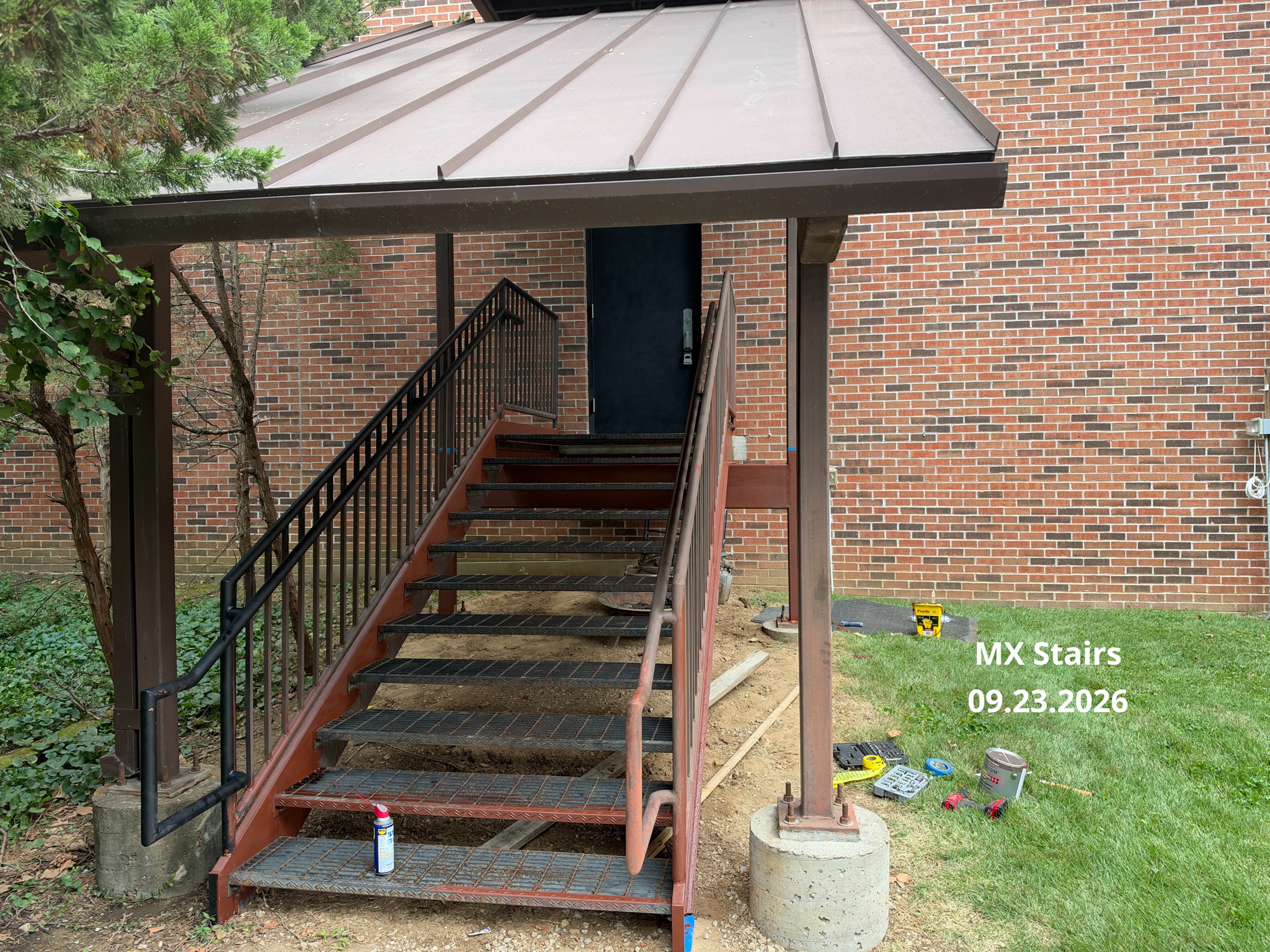
The treads were put back in place after the test. Removing each remaining tread would have required considerable extra disassembly, so the rest of the staircase was prepared and painted with the treads left in place.
Why use truck-bed coating on the treads?
The open-grate treads and front nosings receive the most direct shoe abrasion on the stairway. A textured truck-bed coating was selected for these high-wear areas because it provides a tougher, more abrasion-oriented finish than an ordinary decorative spray paint. The grate and diamond-pattern nosings already provide mechanical traction, so no additional loose anti-skid aggregate was required.
The black tread finish also creates a consistent visual separation between the walking surfaces and the surrounding stair structure.
Maintenance considerations
Inspect annually
Look especially at welds, tread edges, stringers, railing bases, posts and places where moisture can linger.
Touch up early
Clean, treat and recoat small chips or newly exposed metal before rust can spread beneath surrounding paint.
Keep debris away
Leaves, soil and vegetation can retain moisture against painted steel and accelerate coating failure.
Project photo record
Photos below are arranged by the date stored in the original image metadata. Click any image to open a larger copy.
August 30, 2026
September 8, 2026
September 23, 2026
September 24, 2026
September 25, 2026
September 26, 2026
September 27, 2026